
Brain Tumor Symptoms You Should Never Ignore
The brain is the control center of the human body, responsible for regulating movement, memory, speech, emotions, vision, and countless other essential functions. When abnormal cells begin to grow inside the brain, they can form a brain tumor that interferes with these vital functions. While the word “tumor” often creates fear, it is important to understand that not all brain tumors are cancerous. Some are benign (non-cancerous), while others are malignant (cancerous). Regardless of their type, brain tumors require timely diagnosis and appropriate treatment because even a benign tumor can put pressure on sensitive areas of the brain and lead to serious health complications. Recognizing the warning signs early can significantly improve treatment outcomes and quality of life.
Brain tumors can develop at any age and may originate in the brain itself (primary brain tumors) or spread to the brain from cancers elsewhere in the body (secondary or metastatic brain tumors). The symptoms often depend on the size, location, and growth rate of the tumor. In the early stages, the signs may be subtle and easily mistaken for common health problems such as migraines, stress, or fatigue. However, when symptoms become persistent, progressive, or occur together, they should never be ignored. Consulting a neurosurgeon at the earliest opportunity can help identify the underlying cause and begin treatment before complications develop.
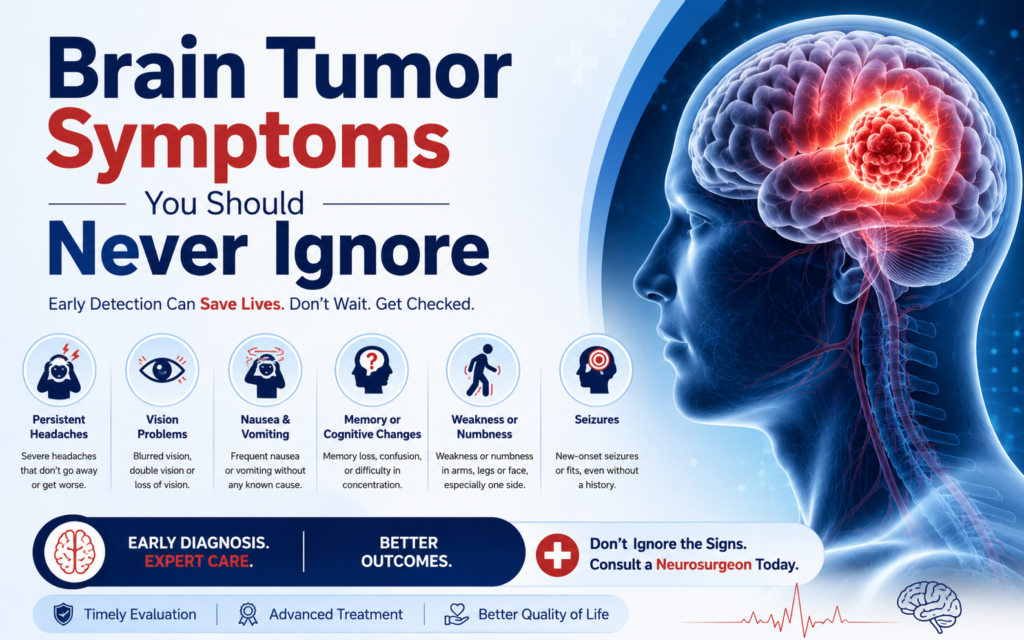
One of the most common symptoms of a brain tumor is persistent headaches that gradually become more frequent or severe. Unlike ordinary headaches, brain tumor-related headaches often worsen in the morning or after lying down for long periods. They may also become more intense while coughing, sneezing, bending over, or performing physical activities that increase pressure inside the skull. These headaches are sometimes accompanied by nausea or vomiting and may not respond well to regular pain medications. Although headaches alone rarely indicate a brain tumor, persistent or unusual headaches that continue to worsen should always be evaluated by a healthcare professional.
Another major warning sign is the occurrence of seizures, particularly in individuals with no previous history of epilepsy. A brain tumor can disrupt the normal electrical activity of the brain, leading to seizures that range from mild muscle twitching to full-body convulsions. Some people may experience brief episodes of staring, confusion, or sudden loss of awareness without realizing they are having a seizure. Any first-time seizure requires immediate medical evaluation because it may be the earliest indication of an underlying neurological condition, including a brain tumor.
Vision problems are another symptom that should never be ignored. Depending on the location of the tumor, patients may experience blurred vision, double vision, partial loss of vision, or difficulty focusing. Some individuals notice reduced peripheral vision or unexplained blind spots that interfere with reading, driving, or daily activities. Since these symptoms may initially appear similar to common eye disorders, people often visit an eye specialist first. However, when eye examinations are normal but vision problems persist, further neurological evaluation becomes necessary.
Brain tumors can also affect speech and communication. Patients may suddenly find it difficult to speak clearly, pronounce words, or understand conversations. Others may struggle to find simple words or become confused during normal communication. Family members often notice these changes before the patient does. Because speech functions are controlled by specific regions of the brain, any sudden or progressive communication difficulty should be assessed promptly.
Another frequently overlooked symptom is weakness or numbness in the arms or legs, especially on one side of the body. A growing tumor may compress the areas of the brain responsible for movement, causing reduced strength, tingling sensations, poor coordination, or difficulty performing routine tasks. Patients may begin dropping objects, struggle to climb stairs, or notice changes in handwriting. If weakness continues to worsen without an obvious cause, neurological assessment is strongly recommended.
Changes in balance and coordination can also indicate a brain tumor. Individuals may experience dizziness, difficulty walking, frequent falls, or a feeling of instability while standing. Tumors affecting the cerebellum, the part of the brain responsible for balance and coordination, often produce these symptoms. These problems may gradually worsen over time and should never be dismissed as simple aging or fatigue.
Many brain tumors also cause memory problems and personality changes. Patients may become forgetful, have difficulty concentrating, or struggle to complete familiar tasks. Friends and family members may notice mood swings, irritability, confusion, depression, or unusual behavioral changes. Tumors located in the frontal lobe can particularly affect judgment, emotions, and decision-making. Since these symptoms often develop gradually, they are sometimes mistaken for stress or age-related memory decline. Persistent cognitive changes, however, require medical evaluation.
Nausea and vomiting, particularly in the morning, may occur due to increased pressure inside the skull caused by the growing tumor. Unlike stomach-related illnesses, these symptoms may occur without digestive problems and are often associated with severe headaches. When nausea, vomiting, and neurological symptoms appear together, immediate medical attention is necessary.
Although the exact cause of most brain tumors remains unknown, several factors may increase the risk. These include exposure to ionizing radiation, certain inherited genetic conditions, family history of brain tumors, and previous cancers that have spread to the brain. However, many patients diagnosed with brain tumors have no identifiable risk factors, which is why paying attention to symptoms is so important.
Diagnosing a brain tumor requires a detailed neurological examination followed by advanced imaging studies. MRI is generally considered the most effective imaging technique because it provides highly detailed pictures of the brain and helps determine the size and location of the tumor. CT scans may also be used, especially during emergencies. In some cases, advanced imaging, angiography, or a biopsy is necessary to determine the exact type of tumor and develop an appropriate treatment plan.
Treatment depends on several factors, including the tumor type, size, location, and the patient’s overall health. Surgery is often the primary treatment when the tumor can be safely removed. Advances in microsurgery, neuronavigation, intraoperative imaging, and minimally invasive neurosurgical techniques have made brain tumor surgery safer and more effective than ever before. Depending on the diagnosis, treatment may also include radiation therapy, chemotherapy, targeted therapy, immunotherapy, or regular monitoring for slow-growing benign tumors. Every treatment plan is personalized to achieve the best possible outcome while preserving normal brain function.
Recovery after brain tumor treatment varies depending on the patient’s condition and the complexity of the procedure. Many patients benefit from rehabilitation programs that include physical therapy, speech therapy, occupational therapy, and neuropsychological support. Regular follow-up scans are essential to monitor recovery and detect any recurrence at an early stage. With modern treatment approaches and comprehensive rehabilitation, many patients are able to return to their normal activities and enjoy a good quality of life.
The most important message is that brain tumors often present with warning signs long before they become life-threatening. Persistent headaches, seizures, vision changes, weakness, speech difficulties, balance problems, memory loss, personality changes, and unexplained nausea should never be ignored. While these symptoms do not always indicate a brain tumor, they should always be evaluated by a qualified neurosurgeon or neurological specialist. Early diagnosis provides the best opportunity for successful treatment, improved recovery, and better long-term outcomes. If you or someone you know experiences any of these symptoms, seek medical attention without delay, because timely action can make a significant difference in protecting brain health.