
How to Recognize the Early Signs of a Brain Stroke
A brain stroke is one of the most serious medical emergencies that requires immediate medical attention. It occurs when the blood supply to a part of the brain is interrupted or when a blood vessel in the brain ruptures, preventing brain cells from receiving the oxygen and nutrients they need to function. Within minutes, these brain cells begin to die, which can lead to permanent brain damage, disability, or even death if treatment is delayed. The good news is that many of the long-term effects of a stroke can be minimized when patients receive prompt medical care. Recognizing the early warning signs is the first and most important step in saving a life. Whether the symptoms appear suddenly or develop over a few minutes, they should never be ignored. Seeking emergency medical attention immediately can significantly improve the chances of recovery and reduce complications.
A stroke is generally classified into three major types: ischemic stroke, hemorrhagic stroke, and transient ischemic attack (TIA). An ischemic stroke is the most common type and occurs when a blood clot blocks an artery supplying blood to the brain. A hemorrhagic stroke happens when a weakened blood vessel bursts and causes bleeding inside or around the brain. A transient ischemic attack, often called a “mini-stroke,” causes temporary symptoms that usually disappear within a few minutes or hours. Although the symptoms may resolve, a TIA should never be taken lightly because it often serves as a warning that a major stroke may occur in the near future. Understanding these different types of strokes helps patients recognize why early diagnosis and treatment are essential.
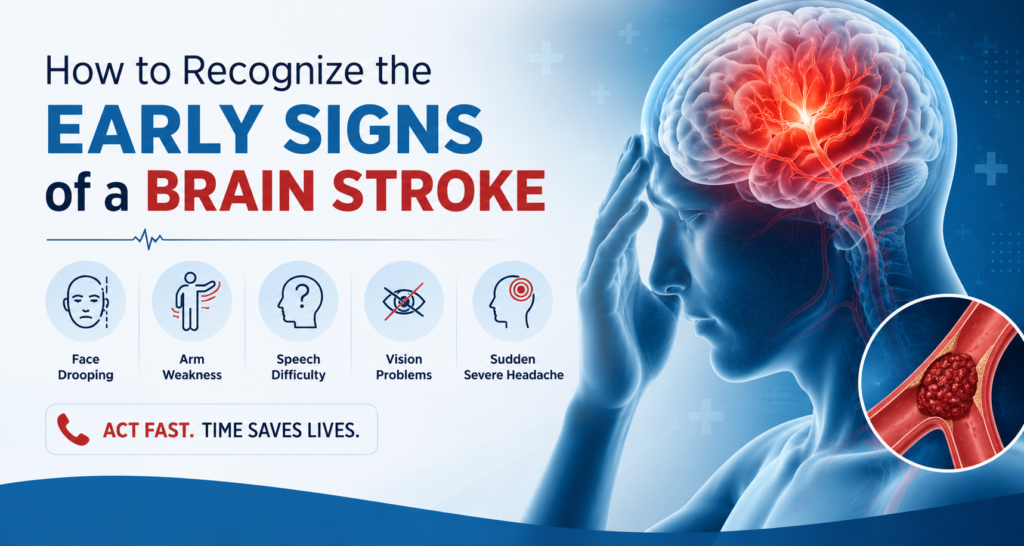
One of the most common early signs of a brain stroke is sudden weakness or numbness affecting one side of the body. A person may notice that one arm feels unusually weak, one leg becomes difficult to move, or one side of the face starts drooping. Smiling may become uneven, and raising both arms may become impossible because one arm drifts downward. These symptoms occur because the affected part of the brain can no longer properly control the muscles on one side of the body. Even if the weakness appears mild or lasts only a short time, it should be treated as a medical emergency because every minute counts during a stroke.
Difficulty speaking or understanding language is another major warning sign that should never be ignored. A person experiencing a stroke may suddenly have slurred speech, struggle to pronounce simple words, or become unable to understand what others are saying. In some cases, they may know exactly what they want to say but cannot express themselves clearly. Friends and family members often notice that the person’s speech sounds unusual or confusing. Because the brain controls language and communication, any sudden change in speech requires immediate evaluation by a medical professional.
Vision problems are also among the early symptoms of a brain stroke. Some people experience sudden blurred vision, double vision, or complete loss of vision in one or both eyes. Others may notice difficulty focusing or a dark shadow covering part of their visual field. These symptoms occur when the areas of the brain responsible for processing visual information are affected. Since many people mistakenly assume that vision changes are related to eye problems rather than the brain, they often delay seeking treatment. However, sudden vision loss should always be considered an emergency until proven otherwise.
Another important symptom is a sudden, severe headache that appears without any obvious reason. This type of headache is more commonly associated with hemorrhagic stroke, where bleeding occurs inside the brain. Patients often describe it as the worst headache they have ever experienced. The headache may be accompanied by nausea, vomiting, dizziness, confusion, or loss of consciousness. While not every severe headache indicates a stroke, a sudden headache that is different from previous headaches should always be evaluated immediately, especially if it occurs with other neurological symptoms.
Loss of balance, dizziness, or difficulty walking can also signal the beginning of a brain stroke. Individuals may suddenly feel unsteady, have trouble coordinating their movements, or experience unexplained falls. They may find it difficult to walk in a straight line or feel as though the room is spinning. These symptoms often occur when the stroke affects the cerebellum or the parts of the brain responsible for balance and coordination. Because dizziness is sometimes mistaken for fatigue or dehydration, many patients delay medical care. However, persistent or sudden balance problems should never be ignored.
Healthcare professionals often recommend remembering the FAST rule because it is one of the simplest ways to recognize a stroke quickly. F stands for Face, meaning one side of the face may droop when the person smiles. A stands for Arms, indicating that one arm becomes weak or cannot be lifted properly. S stands for Speech, referring to slurred or confused speech. T stands for Time, emphasizing that immediate emergency medical treatment is critical. The FAST method has helped millions of people recognize stroke symptoms early and seek prompt medical attention before significant brain damage occurs.
Several health conditions and lifestyle factors increase the likelihood of experiencing a brain stroke. High blood pressure remains the leading risk factor because it damages blood vessels over time. Diabetes, high cholesterol, obesity, smoking, excessive alcohol consumption, heart disease, atrial fibrillation, and a family history of stroke also contribute significantly to stroke risk. Although strokes are more common in older adults, they can also occur in younger individuals, particularly those with uncontrolled medical conditions or unhealthy lifestyles. Regular health check-ups, maintaining a healthy weight, eating a balanced diet, exercising regularly, and avoiding tobacco products can greatly reduce the chances of developing a stroke.
If a stroke is suspected, immediate medical care is essential. Doctors use advanced diagnostic techniques such as neurological examinations, CT scans, MRI scans, blood tests, and CT angiography to determine the type and severity of the stroke. Once diagnosed, treatment begins as quickly as possible. Patients with ischemic stroke may receive clot-dissolving medications or undergo mechanical thrombectomy to restore blood flow. Those with hemorrhagic stroke may require emergency surgery or minimally invasive neurointerventional procedures to stop bleeding and reduce pressure within the brain. Modern medical technology has significantly improved stroke treatment, allowing many patients to recover with fewer long-term complications when treatment begins early.
Recovery from a stroke depends on the extent of brain injury and how quickly treatment was started. Many patients benefit from physical therapy, speech therapy, occupational therapy, and neurological rehabilitation programs designed to help them regain independence. Family support, regular follow-up care, and lifestyle modifications also play an important role in long-term recovery. Although rehabilitation may take weeks or months, many stroke survivors are able to return to their normal activities with proper medical guidance and determination.
Recognizing the early signs of a brain stroke can truly save lives. Symptoms such as facial drooping, weakness on one side of the body, slurred speech, sudden vision problems, severe headache, confusion, dizziness, or loss of balance should never be ignored. Acting quickly and seeking emergency medical care at the first sign of a stroke offers the best opportunity for successful treatment and recovery. Every minute matters because brain cells cannot survive without oxygen for long. By understanding the warning signs, knowing the FAST rule, and encouraging regular health screenings, individuals can help protect themselves and their loved ones from the devastating effects of stroke. Early recognition, prompt diagnosis, and expert neurological care remain the key to improving outcomes and preserving quality of life.