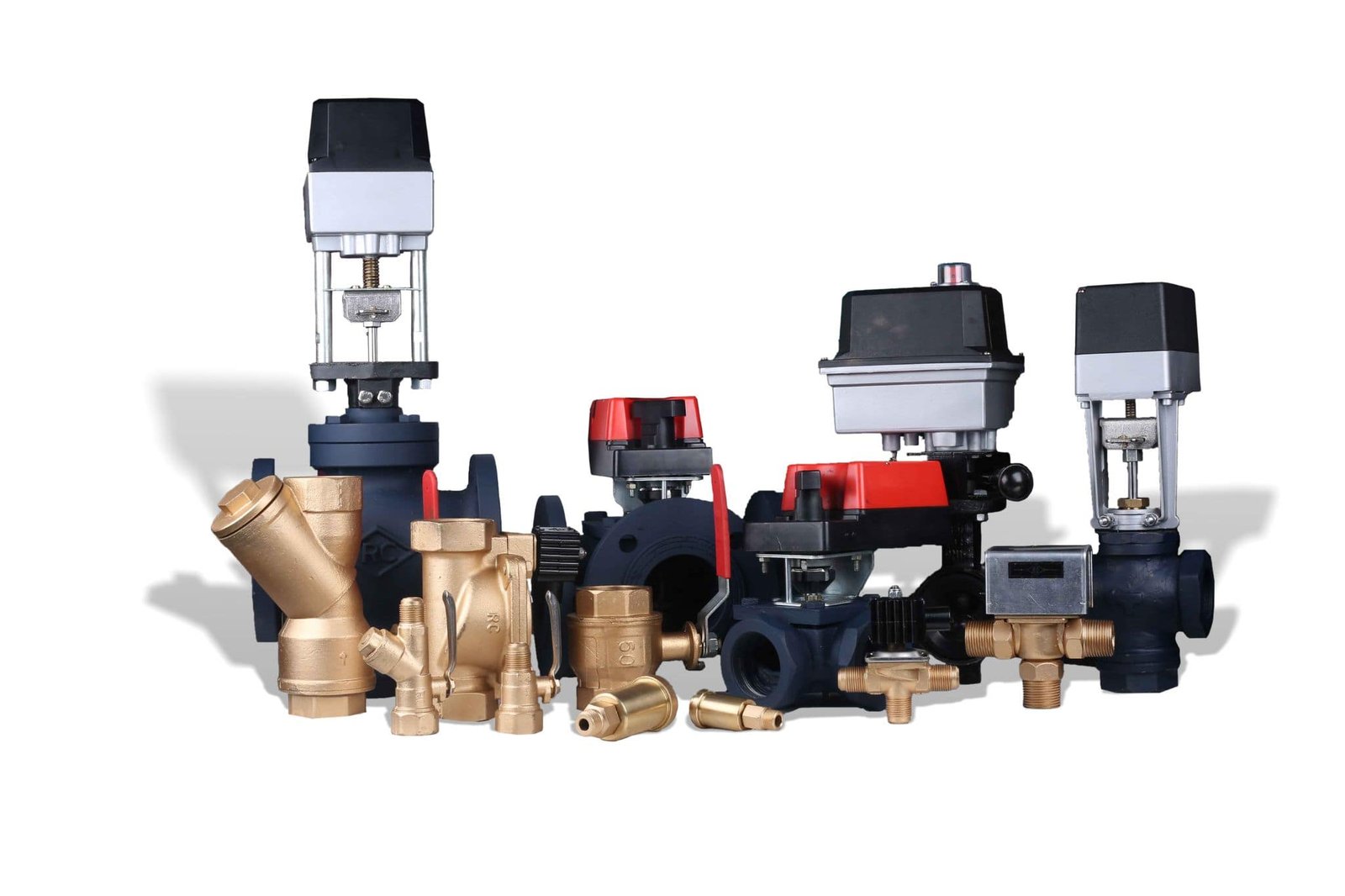
In industrial piping systems, precise flow control is essential for maintaining operational efficiency, safety, and reliability. Among the many types of valves used in industries, globe valves are widely recognized for their excellent throttling and flow regulation capabilities.
Globe valves are commonly used in industries such as water treatment, power plants, hvac systems, chemical processing, and steam systems where accurate flow control is critical.
However, selecting the right globe valve requires careful consideration of several factors including material, pressure rating, fluid type, and installation requirements.
This detailed guide explains how to choose the right globe valve for your application, covering valve design, material selection, operating conditions, and practical tips supported by insights from rc (rapid controls).
1. What is a globe valve?
A globe valve is a linear-motion valve used to regulate or stop fluid flow in a pipeline. It features a movable disk (plug) that moves up and down against a stationary seat to control the flow rate.
Unlike ball or gate valves, globe valves are specifically designed for throttling applications, making them ideal when precise control over flow is required.
Key characteristics
- Excellent flow regulation
- Tight shut-off capability
- Reliable operation
- Suitable for high-pressure systems
- Durable construction for industrial environments
These characteristics make globe valves an essential component in many industrial systems.
2. How globe valves work
The working mechanism of a globe valve is straightforward.
Inside the valve body, a disc attached to a stem moves vertically when the handwheel or actuator rotates.
Operating principle
- Turning the handwheel moves the stem up or down.
- The disc lifts away from the seat to allow flow.
- Lowering the disc restricts or stops the flow.
Because of this design, globe valves can control flow more precisely than many other valve types.
3. Why globe valves are used for flow control
Globe valves are preferred in applications where flow modulation is required.
Advantages
- Excellent throttling performance
- Precise flow control
- Reliable sealing
- Suitable for high pressure and temperature systems
- Durable and long service life
These advantages make globe valves ideal for steam systems, cooling water systems, and industrial process control.
4. Key factors when choosing a globe valve
Selecting the right globe valve involves evaluating several operational parameters.
Fluid type
The type of fluid flowing through the system determines material and design requirements.
Examples include:
- Water
- Steam
- Oil
- Gas
- Chemicals
Each fluid has different corrosion and pressure characteristics.
Operating Pressure
The valve must withstand the system pressure without leakage or damage.
Typical pressure ratings include:
- PN16 – low pressure systems
- PN25 / PN40 – medium pressure
- Higher ratings for industrial applications
Operating Temperature
Temperature affects valve materials and sealing components.
For example:
- Steam systems require high-temperature valves
- Chemical systems require corrosion-resistant materials
Flow Requirements
Determine whether the valve will be used for:
- On/off isolation
- Flow regulation
- Pressure control
Globe valves are particularly effective in flow regulation applications.
5. Types of globe valves
Globe valves come in several designs depending on flow direction and installation requirements
1. Z-type globe valve
The most common design with a horizontal seat.
Best for:
- General industrial use
- Water and steam systems
2. Y-type globe valve
The seat and stem are angled, reducing pressure loss.
Best for:
- High-pressure applications
- Systems requiring lower flow resistance
3. Angle globe valve
The inlet and outlet are positioned at a 90-degree angle.
Best for:
- Pipelines with directional flow changes
- Limited installation space
6. Globe valve materials and their applications
Material selection is essential for durability and compatibility.
Cast iron globe valves
- Suitable for water systems
- Cost-effective
- Moderate pressure applications
Brass globe valves
- Ideal for plumbing and small pipelines
- Corrosion resistant
- Easy to install
Stainless steel globe valves
Common grades include ss304 and ss316.
Best for:
- Chemical processing
- Food and pharmaceutical industries
- High-temperature applications
Carbon steel globe valves
- High mechanical strength
- Suitable for oil, gas, and steam pipelines
RC provides globe valves manufactured from reliable materials to suit different industrial environments.
7. Pressure and temperature considerations
When choosing a globe valve, it must match the operating conditions of the system.
Pressure range
Industrial globe valves can operate under high pressure environments.
Temperature resistance
- Steam pipelines require heat-resistant valves
- Chemical systems require corrosion-resistant seals
Selecting valves with proper ratings prevents leakage and premature failure.
8. Globe valve end connections
End connections must match the piping system.
Common options include:
Threaded connection
- Used for small pipelines
- Easy installation
Flanged connection
- Suitable for large industrial pipelines
- Easy maintenance and replacement
Welded connection
- Used in high-pressure and permanent installations
Rc globe valves are available with different connection options to match varied industrial systems.
9. Manual vs automated globe valves
Globe valves can be operated manually or through automation systems.
Manual globe valves
- Handwheel operation
- Suitable for infrequent adjustments
Automated globe valves
- Electric actuators
- Pneumatic actuators
- Remote control capability
Automated valves are widely used in large industrial plants and process control systems.
10. Why RC globe valves are a reliable choice
RC (Rapid Controls) offers globe valves designed for durability, precision, and long-term industrial performance.
Advantages of RC globe valves
- High-quality construction
- Precision machining for smooth operation
- Reliable sealing performance
- Suitable for multiple industrial applications
- Compatible with automation systems
Rapid Controls valves are widely used in water systems, hvac installations, industrial processing plants, and commercial projects.
11. Maintenance and performance tips
To ensure long valve life:
- Inspect seals periodically
- Avoid excessive throttling under extreme pressure
- Ensure proper installation alignment
- Operate valves regularly to prevent sticking
- Use appropriate lubrication when required
Routine maintenance ensures reliable operation and reduces downtime.
12. Final thoughts
Choosing the right globe valve requires understanding the system requirements, fluid characteristics, pressure ratings, and installation conditions. Selecting the correct valve improves operational efficiency, ensures precise flow control, and increases system reliability.
With reliable manufacturing and application-focused designs, rc (rapid controls) offers globe valves suitable for a wide range of industrial and commercial systems.
By considering the factors outlined in this guide, engineers and plant operators can confidently select globe valves that deliver performance, durability, and long-term value.